
Paying Attention: An Overview of How AI Listens
Introduction
The transformer model was first introduced in a 2017 paper titled “Attention Is All You Need” (1) published by Google. Little did the researchers know at the time, this paper would soon become one of the most cited papers of the 21st century and would provide the basis behind all major AI models today.
Prior to the development of the transformer model, there has been many architectural models built in hopes of best achieving true artificial intelligence, better known as AGI or Artificial General Intelligence. I am not aiming to give full technical and mathematical understanding of the underlying components of the transformer model, rather my goal is to give you an overview of what truly makes the transformer architecture amazing, while providing additional resources for anyone interested in learning further.
Some useful terminology to know:
-
Large Language Models (LLMs) : think of these as the “brain” behind the AI, it is where all the learning and computations is done before producing a result. Under the hood, it is simply a series of neural networks.
-
Tokens : are the standard unit for LLMs, but for the sake of simplicity, I will simply refer to them as one token = one “word”, while in reality 1 token is roughly 3/4th of a word.
-
Parameters / Weights : is the numbers that the LLM tries to optimize through a process called “pre-training”.
-
Activation Function : is a function that is applied at the end of every neuron, there are many kinds of activation functions but they all serve the purpose of defining whether a neuron’s “signal” should pass on to the next layer of neurons. This is important for defining the important set of neurons needed for a particular wanted behaviour. This can be understood in the real world context as well, certain neural pathways in our brain fire for particular skillsets, with artificial neurons, the activation function is trying to figure out what is that pathway and how to amplify its signal.
-
LLM Vocabulary: this is a predefined “vocabulary” of words that contains all the words the LLM will be trained on. For example: GPT-3 contains a 100,261 token vocabulary. This means that GPT-3 could recognise different 100,261 words, similar to how language vocabulary works.
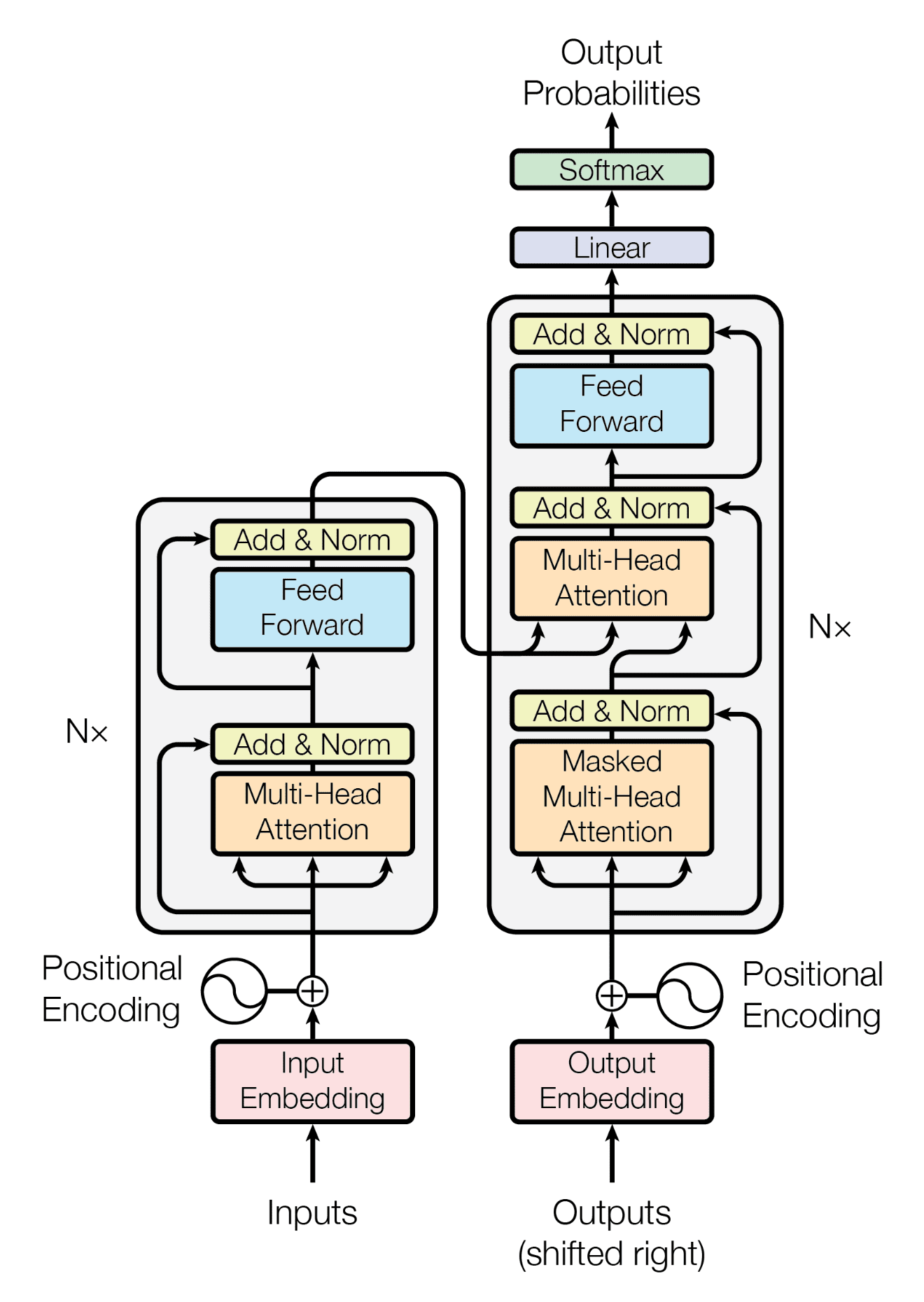
Figure 1: Transformer block from “Attention Is All You Need”.
It can be overwhelming seeing the transformer structure for the first time, rest assured we will not be diving deep into every component, however it is still useful to have an idea of what it looks like.
The transformer model consists of the following main components:
- Encoder
- Feed Forward Neural Networks
- Multi-Head Attention
- Layer Normalization
- Decoder
Encoder
The encoder is responsible for creating meaningful numeric representation of input. The details of how this is done is not important for now, just know that through some mathematical transformations, all words can be represented with a single long vector.
Feed Forward Neural Network
This is the simplest form of Neural Networks. Think of a neural network similarly to how you’d think of the neurons in our brains and how interconnected they are together. The neural network can be broken down into 3 layers, each neuron is connected to every neuron at the forwarding layer:
-
Input layer: typically text, simply recieves the raw data, each node representing one feature of your input.
-
Hidden layers: these are where all the learning happens, each node applies some weight from the previous layer as well as a activation function, then eventually passing the result into the forwarding layer.
-
Output layer: produces the final output — a probability score for every word in the predefined vocabulary.
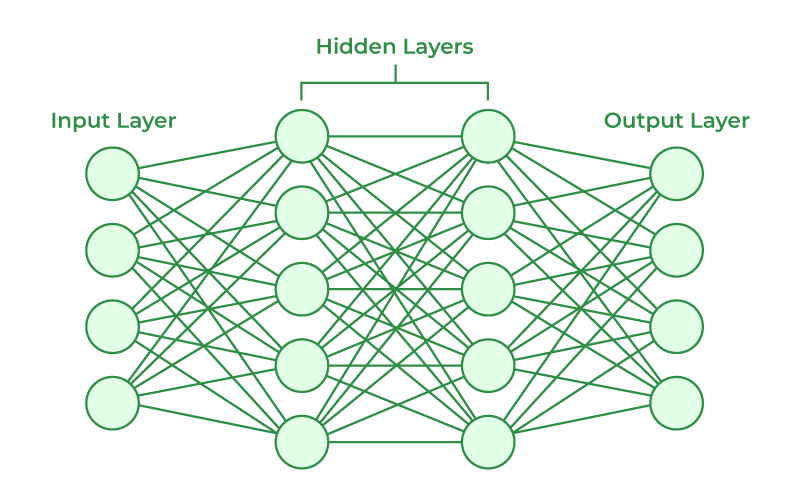
Figure 2: Simple neural network.
Each layer of the neural network “fires” to the proceeding layers and so on, until the last layer comes out with an output. The word with the highest score will be picked, however this will lead to deterministic results to the same input everytime. As a result, different techniques have been developed to avoid picking the same word everytime to provide a different response everytime. Such as randomly picking among the top k highest probability scores.
Normalization Layers
Think of these layers, almost as a form of reset on the numbers being passed from each layer to the next. Why would we need to reset the values? well, sometimes the values can get too large or too small, skewing the learning process of our neural network. The normalization does not entirely reset the value, but rather it performs a mathematical function that keeps the value within a certain range no matter how large or small it originally was. This helps us avoid the problem of overly large/small numbers.
Multi-Head Attention Block
Is the core revolutionary component of the transformer model, the attention block itself deserves it’s own article, however we will explain the gist of what the attention mechnism is and what it does [2].
“Determines how relevant a word is in a sentence, relative to the other words in that sentence.”
If you understand that sentence, the implications of what makes this mechanism game changing becomes obvious. To be able to grade the relevance of a certain word relative to all the other words in a given sentence or paragraph makes the Aritifical Intelligence much more capable of understanding what the “weight” of those words mean.
Again, this happens due to a series of mathematical calculations, while that is out of the scope of this article, many are familiar with the dot-product as a method of determining the distance between two vectors. Recall the encoder mentioned earlier? since words (or tokens) can be represented using vectors, performing dot-product calculations between the vector representations of each word in a sentence relative to the other words in that sentence, will actually give us a form of “similarity test”, originally, the test will be a raw score which is then passed to a function (softmax) and will produce attention weights, a vector of percentages representing how much should each word “attend” to every other word.
Decoder
Somewhat similar to the encoder, the decoder uses the encoder’s vector representations then autoregressively generates one word (token) at a time.
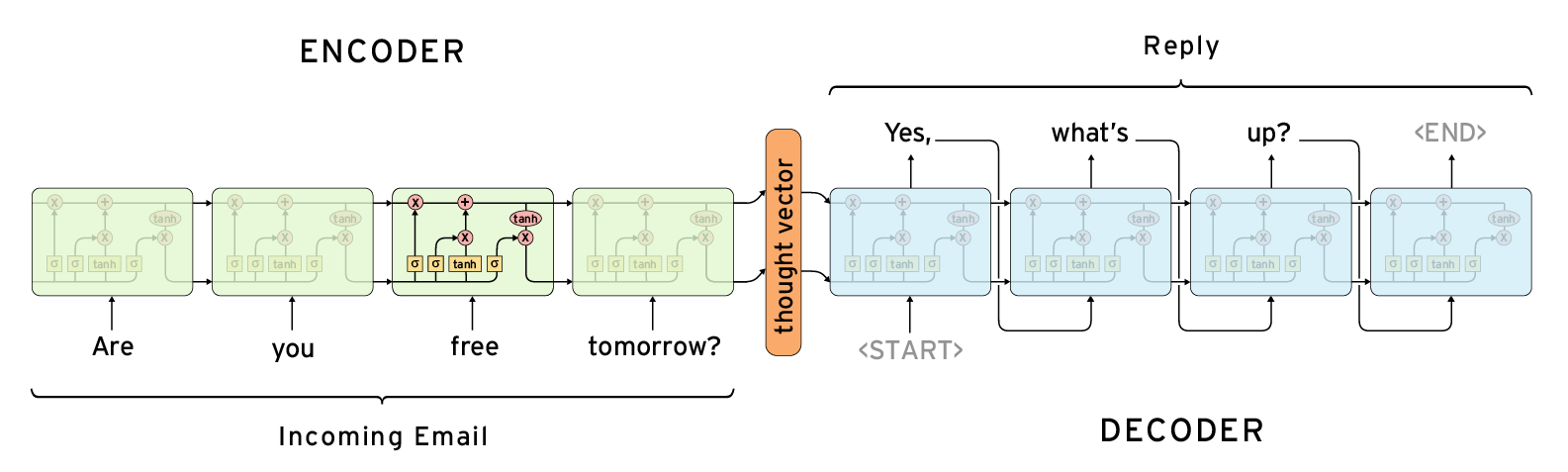
Figure 3: Simple demonstration of encoder and decoders.
The image shows an example of the encoder taking in some user input “Are you free tomorrow?”, and purely through the mechanism of the transformer block and neural network. The LLM is capable of identifying what is the most appropriate response, almost seemingly like it understands the question.
Summary
To sum it up, we realise that “artificial intelligence” is nothing more than an incredibly complex next word generator. It takes your input, analyzes it, based on some statistics, it returns whatever word it thinks should come next.
Regardless, it is still fascinating to think that such a seemingly simple concept can produce unbelieveable results.
This should also reassure you that these models do not possess anything close to a genuine form of “intelligence”. Even though AI can not truly understand human Language, it is remarkable the results and applications that were made capable by it.
Yes, even your favourite image generation AIs use the transformer model at its core, they just apply different strategies to make it work.
References
-
“Attention Is All You Need” paper: https://arxiv.org/abs/1706.03762
-
“Attention in transformers, step-by-step” by 3blue1brown: https://www.3blue1brown.com/lessons/attention
-
Further Reading: The Illustrated Transformer by Jay Alammar: https://jalammar.github.io/illustrated-transformer/